Here’s a card puzzle I love.
There are three roles in the puzzle. The participant, the assistant, and the magician.
To begin the participant picks five random cards from a deck with no jokers and hands them to the assistant. The assistant removes one card and places the remaining cards in slot 1, 2, 3 and 4 on a table. The magician enters the room, having not seen the selection process and is able to determine the card the assistant has in their hand.
Pause here and see if you can work out how it’s possible.
Notes: The assistant and magician do not communicate in any way throughout the trick. The cards cannot be rotated at all.
Part 1: The suit
The first observation is that with five cards, at least one suit must appear twice. This is known as the pigeonhole principle.
For example, in order, the participant might pick a club, a diamond, a heart, and then a spade. The fifth card must be one of the already seen suits.
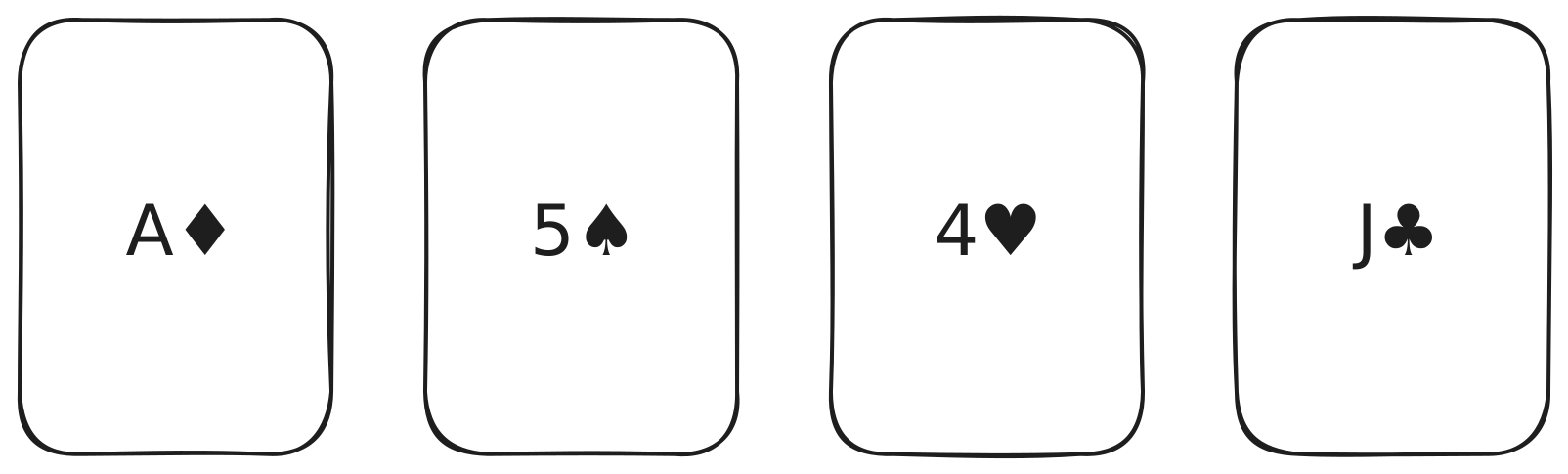
We can exploit this principle to encode the suit of the hidden card. The assistant needs to pick a same-suit pair and hide one of them. The remaining card from that pair is placed first among the four revealed cards. The card in slot 1 indicates the suit of the hidden card to the magician.
For example, in the following the diagram, the magician will know the hidden card is a diamond because the first card is the ace of diamonds.
Part 2: The value
Now the assistant must encode the hidden card’s value using the remaining three cards. Crucially, for the encoding to work, the assistant and magician will need to have agreed upon an ordering scheme for cards beforehand. An approach could be sort by card value and break ties using the suit in alphabetical order (i.e. clubs, diamonds, hearts, spades).
Three cards can be ordered in 3! = 3x2x1 = 6 distinct ways.
At first glance this looks impossible. We have 13 cards in a suit and because the target suit already exists on the table, there are 12 that remain. How do we use 6 combinations to distinguish between 12 cards?
The key is that we must use the relationship between two cards. We can do this by ordering the cards in a circle, by looping back around to the ace after the king.
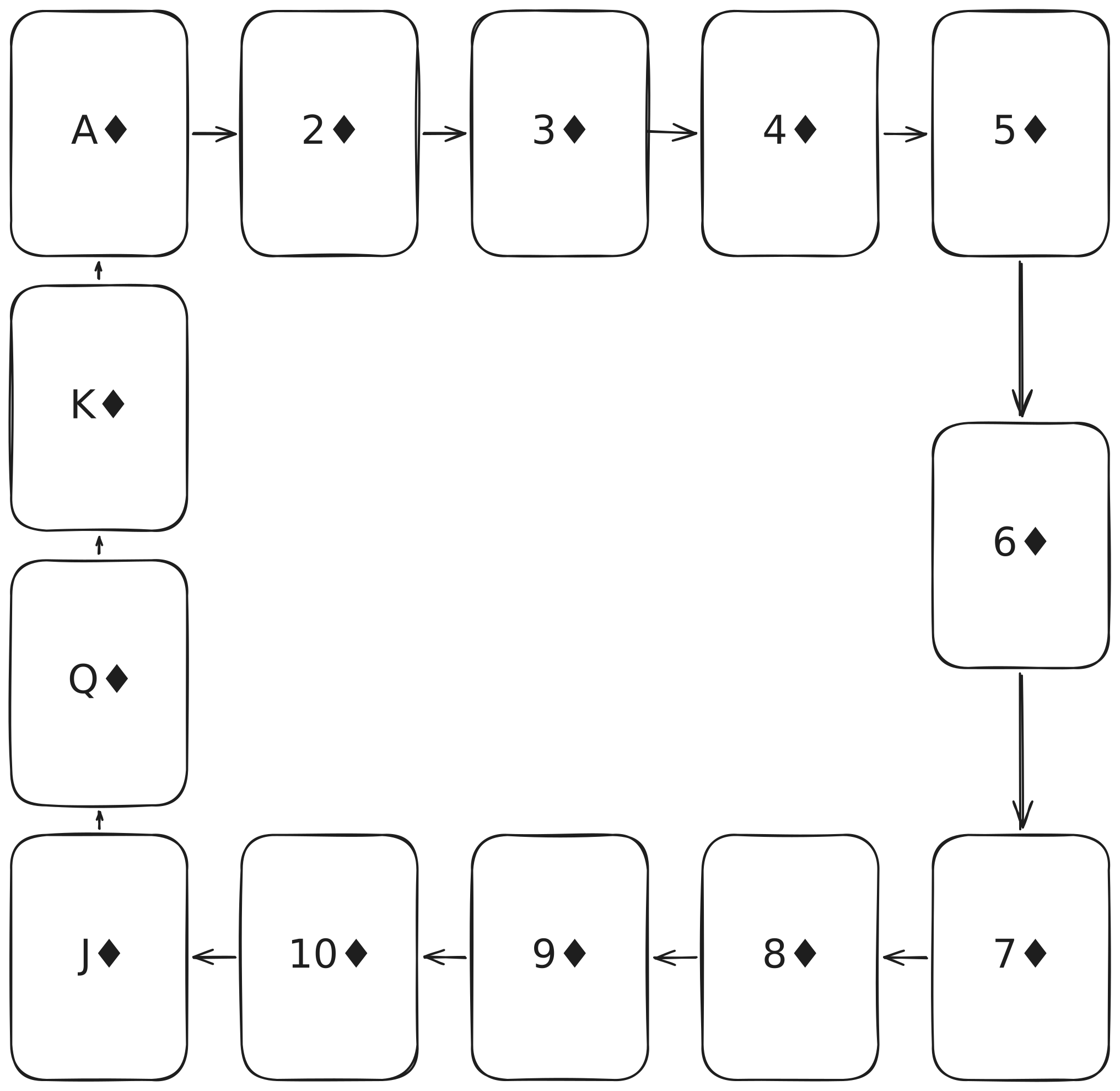
Another observation you may make is that any two cards in this arrangement will be at maximum 6 away from each other. To maximise the distance between two cards we need the two cards to be as close to halfway across the circle from each other as possible. Because 13 is odd, that means one length would be 6 and the other 7. Therefore even in the worst case scenario we still have a path between two cards that is only a distance of 6.
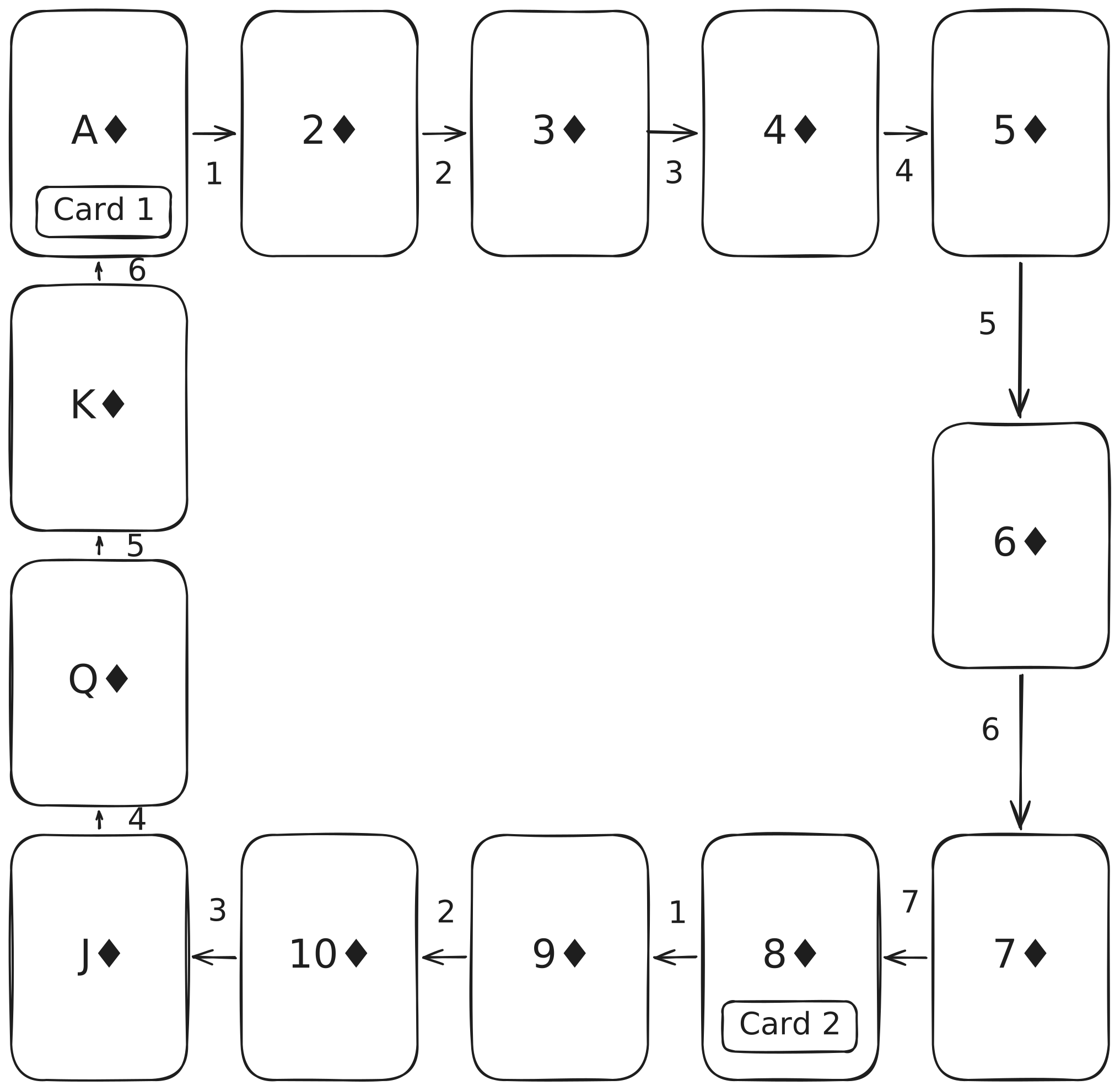
Conveniently for us, that matches perfectly with the number of permutations we have for the remaining 3 cards!
Once that’s been decided, a typical encoding for cards 2 through 4 would look as follows where S = small, M = medium, and L = large.
- S, M, L => 1
- S, L, M => 2
- M, S, L => 3
- M, L, S => 4
- L, S, M => 5
- L, M, S => 6
The final detail the assistant and magician need to have agreed upon is which order they will count in. I think it’s simplest to count up / clockwise. This is important because it will indicate which card from the suit the assistant will select. For example, if the values of the two cards in the same suit are 3 and 7, the assistant would need to pick the 3 and encode the value of 4 with the remaining cards (i.e. M, L, S). The magician could then walk into the room look at the first cards suit, add 4 to it’s value and get the correct card. This would not be the case if the assistant chose the 7, because it’s clockwise distance is 9, which cannot be encoded with only 3 cards.
Part 3: Your turn
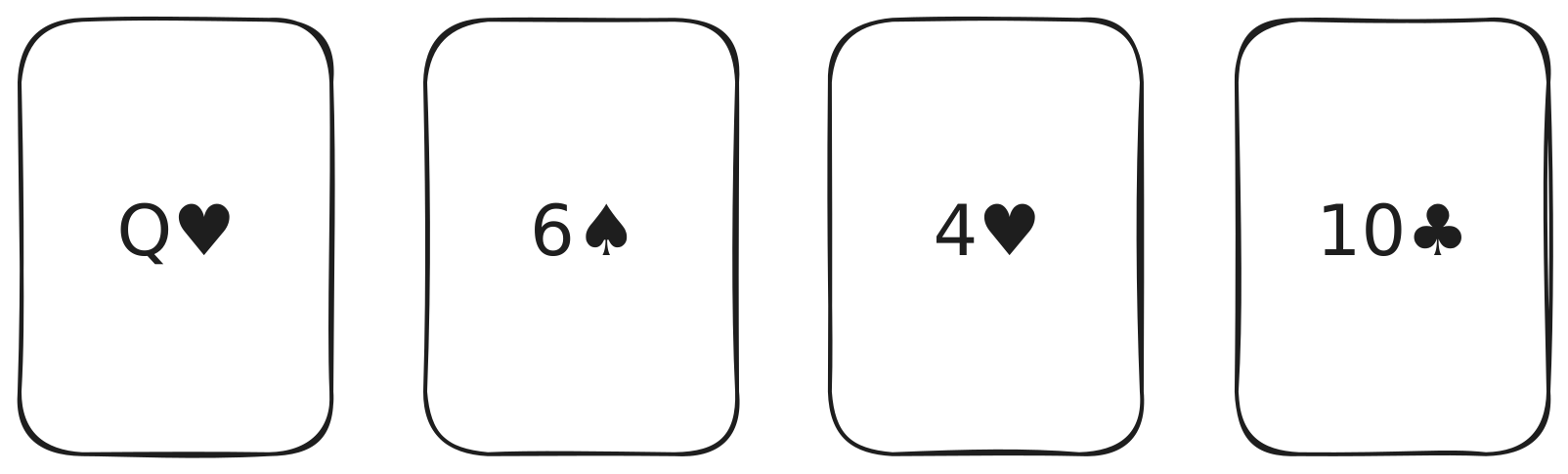
Imagine your the magician. I’m the assistant and I’m going to give you the four cards in order below, your job is to guess which card I’ve hidden.
We’ve agreed upon the following beforehand:
- the first card is going to indicate the suit of the hidden card;
- the remaining 3 cards in order are going to encode the clockwise value to add to the first card (we’ll use the same S, M, L ordering from above); and
- to order the cards, first compare the card value then break ties with the alphabetical ordering of suits (clubs before diamonds before hearts before spades).
I give you the following cards. What is the hidden card?
Reveal answer
2 of HeartsThis puzzle is known as the Fitch Cheney 5-Card Trick.